
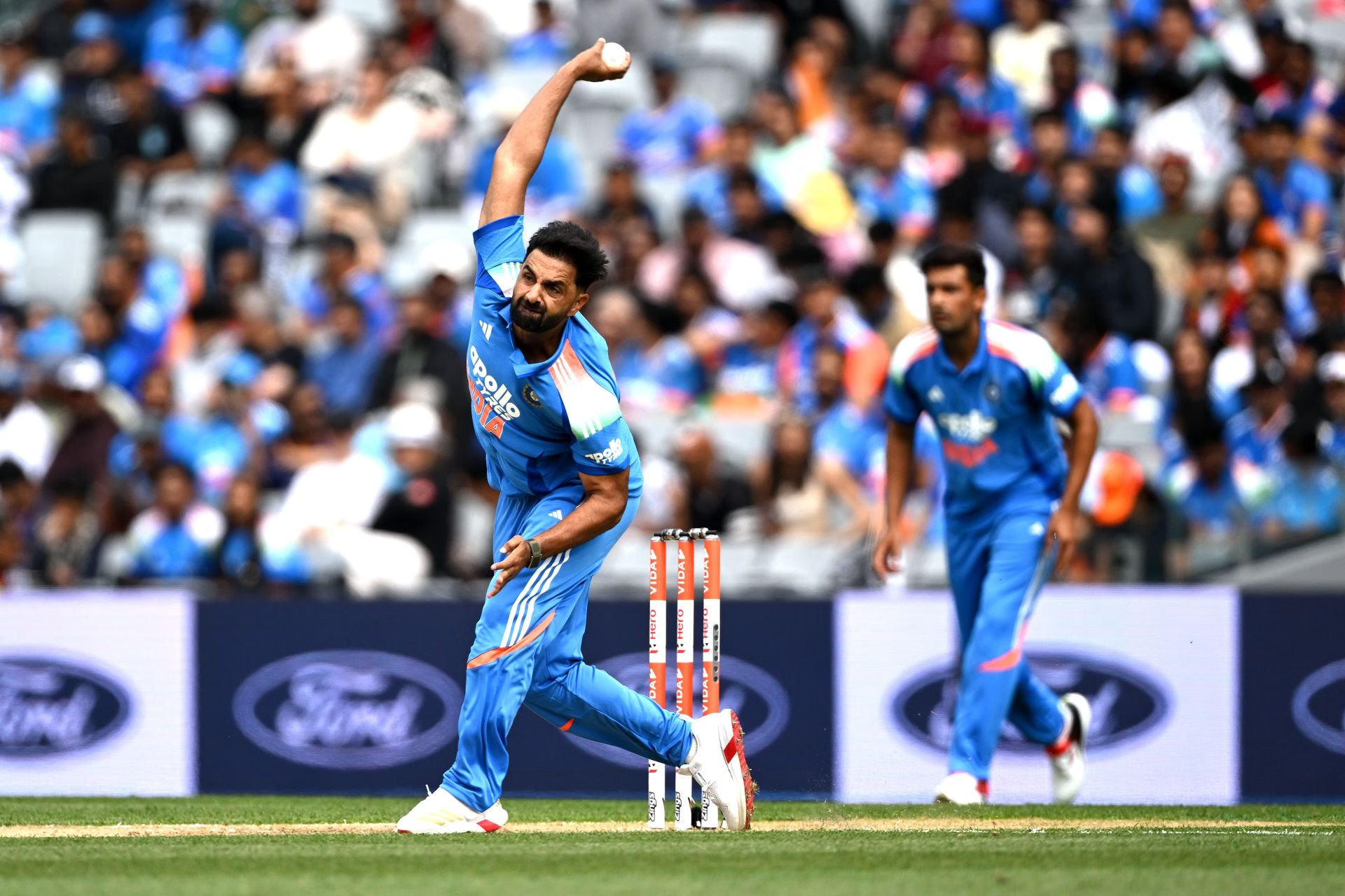
In the opening ODI of the 2026–27 series, India defeated New Zealand by five wickets at Auckland on November 4, 2026. The bowling performance of Auqib Nabi, who was added to the Indian team after Prasidh Krishna was sidelined due to injury prior to the one-day series, was one of the game’s talking points.
Over the course of his six overs, Auqib Nabi conceded 33 runs while going wicketless. Unfortunately, Naman Dhir dropped Tim Seifert at midwicket in the second over, preventing the young pacer from taking his first ODI wicket. Former India captain Sunil Gavaskar provided a thorough evaluation of Nabi’s performance during New Zealand’s innings while speaking on Sony Sports.
Auqib Nabi had early promise with the new ball, but as his spell went on, he found it difficult to sustain that level of performance, according to Gavaskar. I thought he was probably anxious. He was able to swing the ball during the first one or two overs, but he stopped swinging it after that. “His length was good in the first over, but it became fuller after that,” Gavaskar stated.
Gavaskar went on to explain why, at Auckland, where the straight boundaries are noticeably short, the fuller length proved costly. His reasoning was correct because, if he bowls full, the ball will move slightly in the air after pitching. But because the straight boundaries are so tiny, the batters exploited this and began hitting fours. There was no movement at all when he pulled his length back after that, according to Gavaskar.
What did Sunil Gavaskar say about the dropped catch and Auqib Nabi’s anxiety?
According to Gavaskar’s analysis, Nabi’s inconsistent performance during the spell was probably caused by anxiety. Nabi’s length was disciplined in the first over, but as the spell went on, it became increasingly fuller, allowing New Zealand’s batters to release their arms through the straight boundaries, the former India opener noted.
Nabi’s problems were made worse by the second over’s dropped catch at midwicket. Tim Seifert was dismissed by fielder Naman Dhir, depriving Nabi of his first ODI wicket. Gavaskar admitted that these kinds of situations can have an impact on a bowler’s confidence and rhythm, especially during a debut or early international appearances.
For the remaining ODIs, should India stick with Auqib Nabi?
Gavaskar encouraged the selectors and team management to keep believing in Nabi for the rest of the series despite the challenging performance at Auckland. He mentioned that the conditions at the future locations might be better for a swing bowler like Nabi.
Sometimes you bowl well, but you don’t get any wickets. In Wellington, he might receive a bit more assistance. The Basin Reserve will not host the game. The other stadium has it. The ball could swing more in the Test match if it had taken place at the Basin Reserve, which is an open field. It’s the white ball in this match. That also doesn’t swing much, according to Gavaskar.
Also Read: Rahul Chahar Wife: Ishani Johar Age, Biography, Marriage and Divorce
Sometimes, though, the atmosphere changes completely if you get rhythm in your opening over and take a wicket. I think they ought to have faith in Nabi. He should be given opportunities because he will receive some assistance on all wickets, whether it is in Wellington or Christchurch,” he continued.

Ishaan focuses on player stories, team strategies, and the latest developments across all formats of cricket. He enjoys exploring the journey and achievements of cricketers from around the world.











[…] Also Read: Gavaskar analyses Auqib Nabi’s spell in NZ vs IND 1st ODI […]
Comments are closed.